

The Inflation Crossover Everyone's Celebrating — And What the Data Actually Say

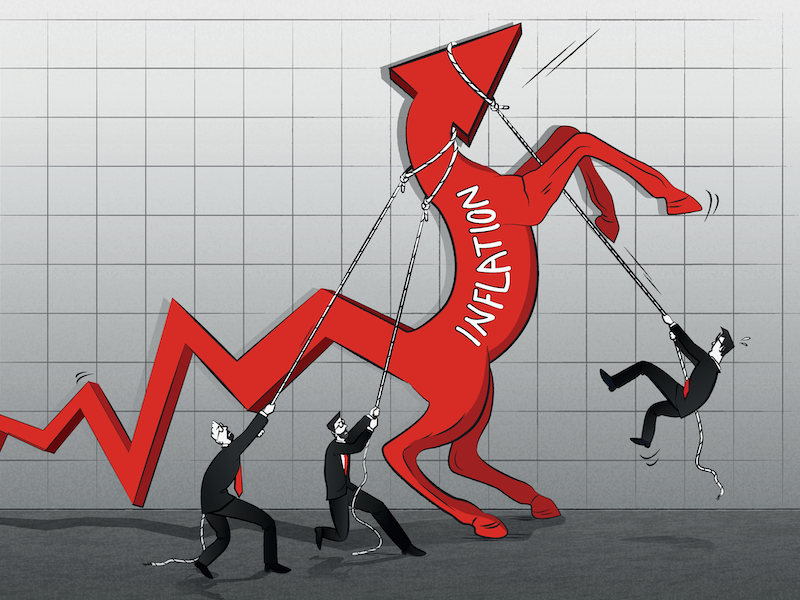
The CEO of Mexico News Daily published a piece this month with a headline built to travel: "For the first time in over fifty years, outside a brief 2022 blip, Mexico's inflation rate has dropped below the United States." The numbers he cites are real. Mexico at 3.37%, the U.S. at 4.2%, Mexican government debt at 45% of GDP against 123% up north. It's a clean story, and clean stories move fast in expat Facebook groups and WhatsApp threads.
I'm not here to sell you the clean version. I'm here to deliver the reality, because the reality is more useful — especially if you own property here, are thinking about buying, or are trying to figure out what your dollars are actually worth in Mexico right now.
Let's take it apart.
The gap that already closed
Mexico's headline inflation did come in at 3.37% in June — the lowest reading since December 2020. That part is solid, straight from INEGI. No argument.
The problem is the other half of the comparison. The 4.2% U.S. figure was May's number. The June U.S. CPI landed on July 14 — and inflation up north fell to 3.5%, down from 4.2%, its first decline in five months. So the dramatic "3.37 versus 4.2" spread that makes the headline sing? As of this week's data, it's 3.37 versus 3.5. Mexico is below the U.S., yes. By thirteen hundredths of a point. That's not a chasm. That's a rounding argument.
Both countries fell for the same reason — and it wasn't discipline
Here's the part that deflates the "Mexico is fundamentally winning" narrative. Both countries' inflation dropped in June for the same reason: energy prices fell after the U.S.–Iran ceasefire. Gasoline came down on both sides of the border. That's not a story about sound Mexican monetary policy versus reckless American spending. It's a story about oil.
And when you strip out the volatile stuff — food and energy — and look at core inflation, the number central banks actually watch, the whole thing flips. U.S. core inflation fell to 2.6% in June. Mexico's core is sitting at 4.03%, still above the top of Banxico's tolerance band. Underlying inflation in Mexico is meaningfully higher than in the United States. The headline crossover is, to a large extent, a tomato-and-gasoline event that happened to line up for one month.
The debt number is the rosy end of a real range
On debt, the direction is genuinely in Mexico's favor. U.S. federal debt is around 124% of GDP and climbing — that's accurate and it's a real long-term problem. But Mexico's "45% and falling" is the friendliest measure on the shelf. Depending on how you count, Mexico runs anywhere from the mid-40s on a narrow or PPP-adjusted basis up to about 58% of GDP on the broader gross measure as of early 2026. And "falling" is a stretch — Mexico ran deficits in the neighborhood of 5 to 6% of GDP in 2024–25, and most projections have the ratio flat to slightly rising, not declining.
The big-picture point survives: U.S. debt is two to three times Mexico's as a share of the economy, and it's the one clearly headed the wrong way. But if someone hands you "45% and falling," know that you're being shown the prettiest photo in the album.
The peso — where the story runs backwards
This is the part that matters most if you live here or sell here, and it's where the original piece gets the near-term causation backwards.
You'd think lower inflation means a stronger peso. It sounds obvious — but right now it's working the other way, and here's why.
What's really holding the peso up isn't Mexico's inflation number. It's Mexico's high interest rates. Banxico, Mexico's central bank, pays 6.50%, while the US Federal Reserve pays only 3.50–3.75%. That gap makes it attractive to move money into pesos to earn the higher return — investors borrow where rates are low and park it where rates are high. That flow of money is what props the peso up.
Now connect it to inflation. When inflation falls, it takes pressure off Banxico to keep rates high — so falling inflation actually makes a rate cut more likely, not less. And if Banxico cuts, that interest-rate advantage shrinks, the money stops flowing in, and the peso weakens. That's why the peso has slipped about 1.7% in the past month even as inflation came down.
So the honest read is the reverse of the tidy story: if Mexican inflation keeps falling and Banxico eventually cuts rates, the peso is more likely to soften than to strengthen. "Lower inflation, stronger peso" sounds right and points you in exactly the wrong direction.
The one line in the original story that's completely true
"Foreigners could start feeling Mexico get more expensive for the first time in decades." That's real. But the reason isn't June's inflation print — it's the peso of the last two years. A dollar buys around 17.4 pesos today. A couple of years ago it bought closer to 20. That's roughly a 13% haircut on your purchasing power before local prices even enter the equation. And local prices are entering it: the categories running hottest in Mexico right now are restaurants and lodging near 7% and financial services above 6% — precisely the things visitors, expats, and second-home owners spend on.
If you've felt like your money doesn't stretch the way it did when you first came down, you're not imagining it, and you're not wrong. The "Mexico as a cheap dollar play" pitch has genuinely weakened. That's worth sitting with, whether you're buying, renting, or just budgeting a winter here.
And if you're Canadian — which a large share of the people wintering on this coast are — the squeeze is worse, not the same. A Canadian dollar buys about 12.4 pesos right now, against roughly 17.4 for a U.S. dollar, and the loonie has slid around 6% against the peso just in the past year. So Canadians are absorbing a double hit: the strong peso that pinches every foreigner, layered on top of a weak Canadian dollar that's losing ground to the greenback too. An American feels Mexico getting pricier; a Canadian feels it about twice over. If your budget runs in loonies, the "cheap Mexico" story isn't fading — it's already gone.
The tension nobody's naming
One more thing the celebration skips. The upbeat framing says wage growth is finally outpacing inflation, so Mexicans are gaining real purchasing power. The real-wage gains are genuine. But they're happening inside an economy that shrank 0.6% in the first quarter of 2026 on weak consumer spending and investment. Rising real wages in a contracting economy is not an unambiguous win — it's a tension. And a story that gives you the good half without the hard half isn't giving you the whole thing.
The bottom line
Mexico's inflation numbers this year are legitimately encouraging, and the long-run contrast with U.S. debt is real. But the specific viral version — the fifty-year crossover, the wide gap, the 45%-and-falling — is the boosterish cut. It comes, not coincidentally, from a source whose business is selling optimism about Mexico.
The reality is quieter and more useful: the inflation gap essentially closed this week, the underlying trend still favors the U.S., the peso's strength rests on a rate gap that disinflation could erode, and your dollars really are worth less here than they used to be. None of that is a reason to be down on Mexico. It's just the difference between a headline and a decision. If you're making decisions with real money, use the second one.

Why none of this is a reason to sit out Mexican real estate
Here's what all of that adds up to for a buyer, and it isn't caution — it's opportunity. Every soft spot in the celebratory story is a hard advantage if you're purchasing property with dollars.
Take the peso. A currency that softens as Banxico eventually cuts rates is a currency that buys you more house per dollar, not less. The people who bought in Puerto Vallarta when the peso sat near 20 to the dollar locked in bargains the 17-peso crowd never saw. If disinflation erodes the carry trade the way the data suggests it might, the buyers who move while the dollar has the upper hand are the ones who look smart in three years. Waiting for the “clean” headline to resolve is how you miss the entry.
Then there's the debt contrast, which is the one part of the original story that fully survives scrutiny. Mexico's government debt is a fraction of Washington's and heading the better direction. That is the backdrop that matters for a long-hold asset like a home: a country living within its means, with real wage growth in its workforce, is a country whose property market has room to mature. You are not buying a one-month CPI print. You are buying a coastline, a title, and a decade.
And the fundamentals under Puerto Vallarta specifically haven't moved an inch because of a tomato-and-gasoline inflation month. The sun, the bay, the flight connections, the medical care, the community — the reasons people actually buy here — are exactly where they were. What changes month to month is the noise. What holds is the value. My whole job is telling those two apart for you, with the real numbers, before you wire a peso.
Let's talk before you decide
If you own here, are thinking about buying, or just want to know what your dollars are really worth in this market right now, talk to me before you act on a headline. I run the actual MLS data — closed sales, real absorption, price bands — for every client, and I'll give you the quiet, useful version, not the viral one. No pressure, no pitch: just the read you'd want a data guy in your corner to give you.
Nik Valcic — MexHome Real Estate, Puerto Vallarta (Zona Romántica). Reach out anytime and let's look at your numbers together. 52-322-274-7775 / nikvalcic@mexhome.com


Comments